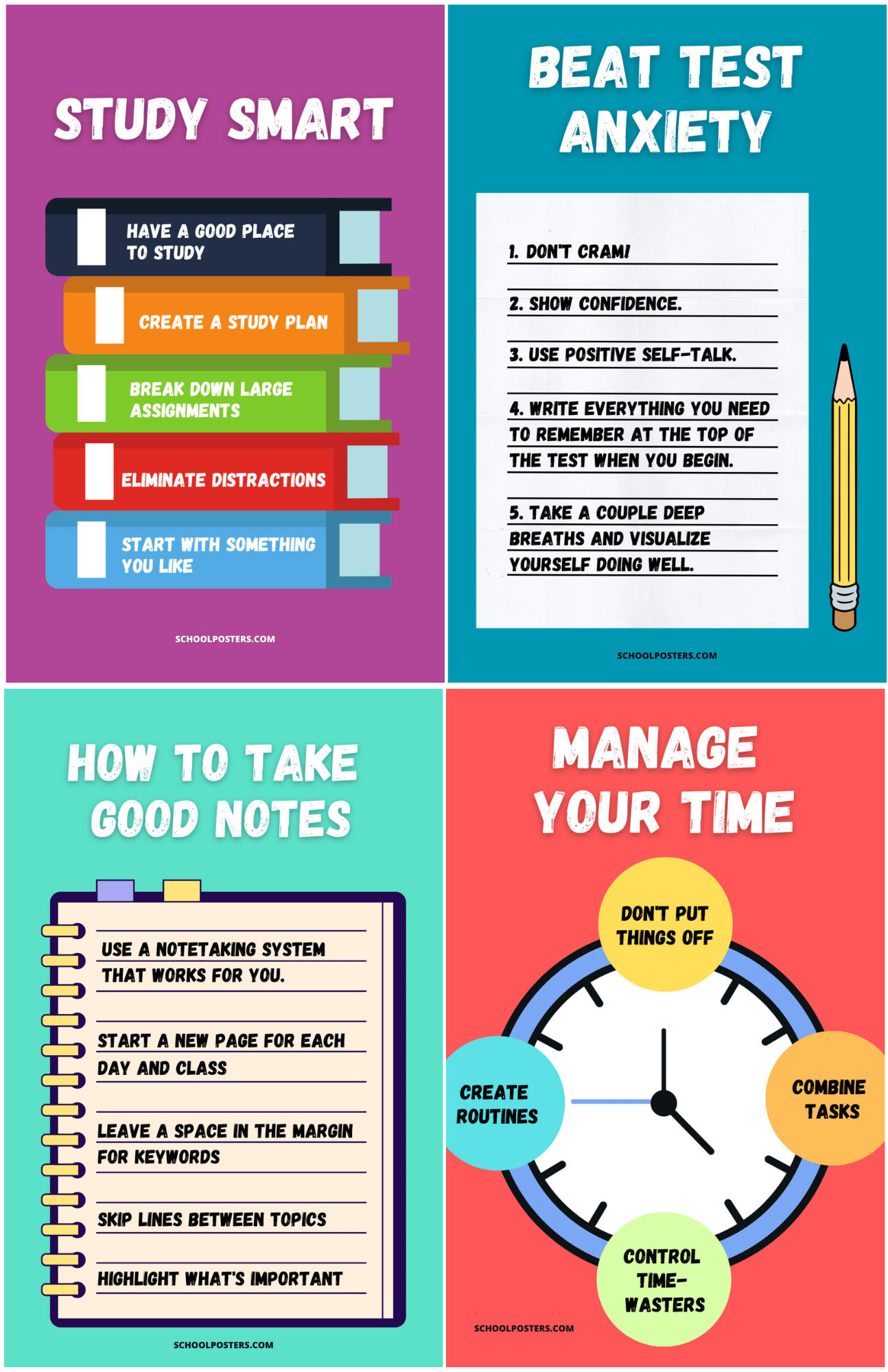
Top 10 Study Techniques to Maximize Your Learning
Studying effectively is crucial for academic success, and adopting the right techniques can significantly enhance your retention and understanding of the material. Here are the top 10 study techniques you can use to maximize your learning:
- Active Recall: Test yourself on the material instead of passively reviewing notes. This technique has been shown to strengthen memory retention.
- Spaced Repetition: Spread out your study sessions over time to improve retention and prevent burnout.
- Mind Mapping: Visualize connections between concepts to enhance understanding and recall.
- Practice Testing: Regularly take practice tests to evaluate your knowledge and become familiar with the exam format.
- Pomodoro Technique: Study in short bursts (25 minutes), followed by a 5-minute break to keep your mind fresh.
- Summarization: Summarize what you've learned in your own words to reinforce your understanding.
- Teaching Others: Explaining concepts to peers can deepen your understanding and identify knowledge gaps.
- Varied Practice: Mix different subjects or types of problems in one study session to enhance problem-solving skills.
- Study Environment: Create a distraction-free study space to improve focus and productivity.
- Goal Setting: Set specific, measurable goals for each study session to keep you motivated and on track.
How to Create a Study Schedule that Works for You
Creating a study schedule that works for you is essential for maximizing productivity and achieving academic success. Start by assessing your current commitments and identifying the time you can realistically dedicate to studying each week. Consider using a weekly planner to visualize your available hours. Once you've determined your time slots, prioritize your subjects based on difficulty and upcoming deadlines. A useful approach is to implement a priority matrix where you categorize tasks into four quadrants: urgent and important, important but not urgent, urgent but not important, and neither. This will help you allocate your study time effectively.
Next, consistency is key in any effective study schedule. Aim to study at the same time each day to build a routine that reinforces your learning habits. Break your study sessions into manageable time blocks, such as the Pomodoro Technique, which involves studying for 25 minutes followed by a 5-minute break. This method not only enhances focus but also reduces mental fatigue. Remember to include regular reviews of the material you've covered to facilitate retention. As you fine-tune your study schedule, be flexible and adjust as necessary to find what truly works for you.
The Science Behind Effective Study Habits: What Every Student Should Know
The journey to academic success is not just about intelligence; it heavily relies on effective study habits. Research shows that integrating different study techniques can greatly enhance retention and understanding. For instance, the Pomodoro Technique encourages students to study in focused intervals (typically 25 minutes), followed by short breaks. This method helps maintain concentration and prevents burnout. Additionally, utilizing active recall—where students attempt to remember information without looking—has been proven to strengthen memory pathways, making it easier to retrieve information during exams.
Moreover, environment plays a crucial role in cultivating effective study habits. A designated study space, free from distractions, can significantly enhance productivity. To maximize effectiveness, students should consider implementing organized schedules that align with their personal peak performance times. Here are some tips to create an optimal study environment:
- Keep the study area tidy and well-lit.
- Minimize digital distractions by silencing notifications.
- Incorporate comfortable seating and ergonomic furniture.
By understanding the science behind studying efficiently, every student can adopt strategies that cater to their learning style, ultimately leading to better academic performance.